

The Highest Possible Scores On Game Shows
James Holzhauer could never.
One of my favorite things about game shows is seeing people winning a ton of money and prizes, or scoring a ton of points. So that naturally makes me wonder how far you can push these scores. Let’s take a bunch of game shows to the limit today, and see what their maximum scores would be under the best possible circumstances.
Jeopardy!
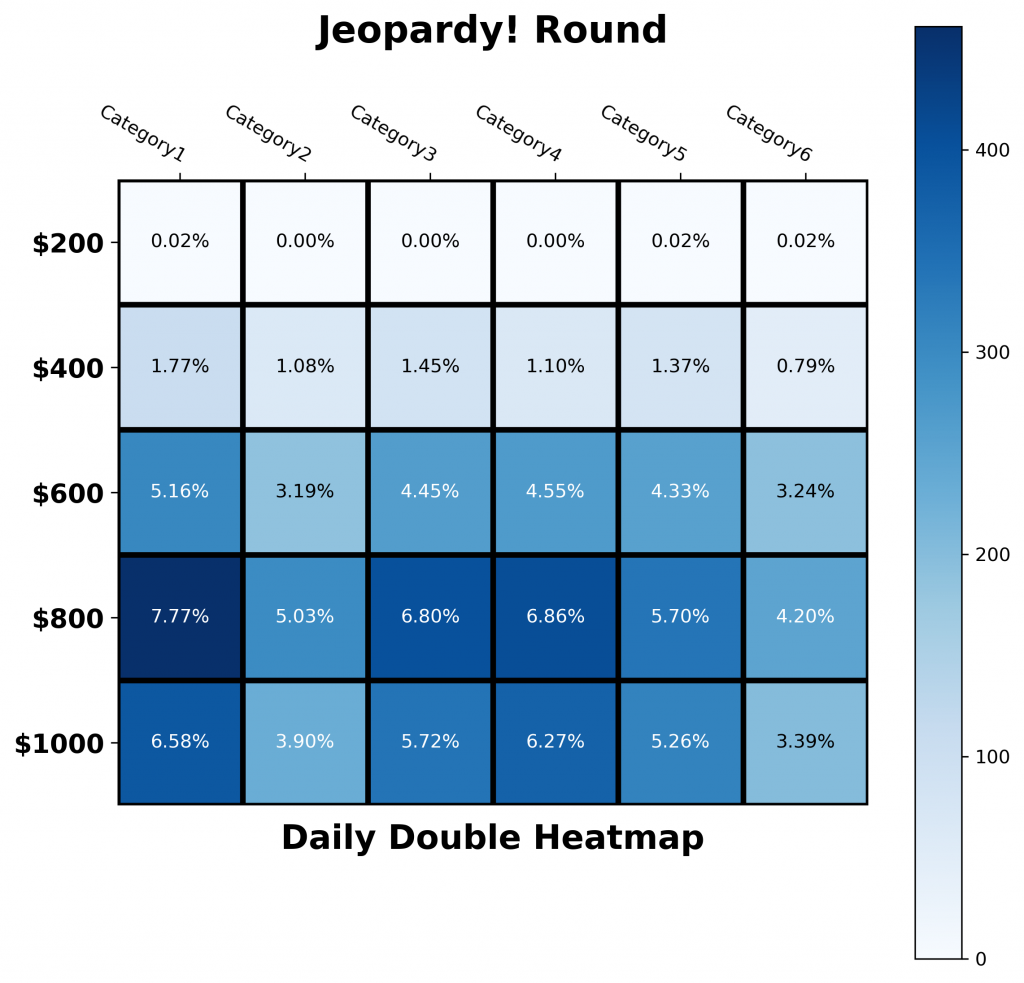
The perfect Jeopardy! score is virtually impossible to reach for several reasons. For one, you obviously have to answer every single clue correctly. If your opponents get a single one right, your flawless run is over. You also have to wager all of your money on the three Daily Doubles, as well as Final Jeopardy!. This would never, EVER happen in a real game, for reasons that will become apparent shortly.
The most commonly cited perfect score on Jeopardy! is $566,400. If you get every clue right in the Jeopardy round, you can earn a maximum of $35,600. By the end of Double Jeopardy!, the maximum score skyrockets to $283,200, thanks to the higher clue values as well as the two Daily Doubles on the board. Then you can wager all of your money in Final Jeopardy to double your money yet again.
This hypothetical perfect game requires us to make a lot of assumptions. Number 1, the Daily Doubles have to be at the very top row of the board, which is exceedingly rare. If they appear anywhere else, the highest possible score would be lower, because replacing a $1,000 clue takes more money off the board than replacing a $200 clue. Number 2, you need to find every Daily Double at the very end of each round, which allows you to double all the money that was available on the board.
Wagering all your money on Final Jeopardy! is almost always a terrible idea when you’re in the lead, but it’s especially bad if you’re going for a perfect score. Since you would have correctly responded to every single clue, your opponents wouldn’t have any money, meaning they’d be ineligible to play Final Jeopardy. If you’re the only person taking on the final clue, you should avoid wagering all your money. If you go all in and get it wrong, you’d finish with $0 and lose the game. In order to return as the champion, you have to finish Final Jeopardy! with at least $1.
A perfect score on Jeopardy! requires you to know every single clue on the board, win every single buzzer race, and make completely ludicrous wagers for the entire game. But if a contestant managed to pull it off in a standard game, they would finish with just over half a million dollars. Not bad.
We’re not done here though, because there’s one obscure way to push the maximum score even higher. In 1997, Jeopardy! introduced bonus categories to the game, and they appeared in a handful of episodes. Each of these clues had two right responses, but contestants only needed to provide one of them. After that, Alex Trebek would ask if they wanted to double their earnings for the clue by giving the other correct response. So if you pick the $1,000 clue in a bonus category, the actual total value of the clue would be $2,000. Bonus categories appeared in only three episodes, and they haven’t been seen since February 1998.
Daily Doubles never appeared in these categories, so we’ll assume that they can’t for this exercise. That means we can fit 9 bonus categories into a single game (5 in the Jeopardy round and 4 in Double Jeopardy). The categories that DO contain Daily Doubles would work as normal, but the value of every other clue would be doubled. If a board with that many bonus categories ever appeared on Jeopardy (it won’t), then the most you could score is $998,400.
Quite frankly it annoys me how it’s almost a million dollars but not quite. Oh well.
If we assumed that bonus categories COULD have Daily Doubles, and that you could double your score twice by giving both correct responses, the maximum score skyrockets yet again to $6,809,600. If you pulled this nonsense off, it would make you the highest earning game show contestant in US history.
Wheel of Fortune
Let’s get the easy part out of the way first. Each episode of Wheel of Fortune has five toss-ups, and solving them all will net you $13,000. If we want to earn the most possible money, we’ll obviously want to win a million dollars in the bonus round as well. So right off the bat, we’ve gotten our maximum score up to $1,013,000. This is just enough money to buy one egg. Now we need to figure out how much the remaining main game puzzles are worth, which is kind of a tricky question to answer.
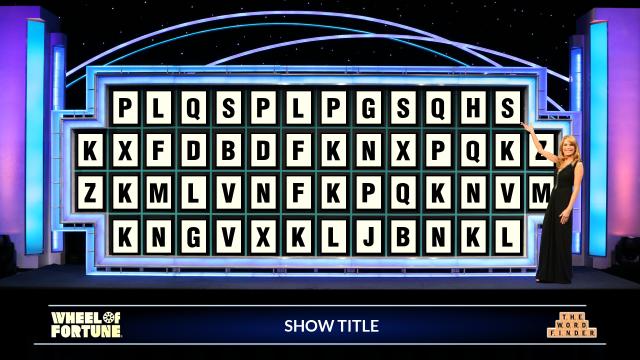
Wheel of Fortune‘s puzzle board has 52 spaces, spread out across 4 rows. The top and bottom rows have 12 spaces each, and the middle rows have 14. So the most money we can earn in a round is 52 times the top dollar value on the wheel. Of course in order to achieve this maximum score, every single space on the board has to contain a consonant. That means the theoretical perfect score isn’t achievable unless the puzzle writers start making up words.
At some point during the game, we also have to pick up the million dollar wedge, otherwise we won’t be able to bring it to the bonus round. The wedge doesn’t give you any money during the main game though, so the best time to grab it would be during round 1, when the top dollar value is just $2,500. That way, we’d be sacrificing the least possible money to win the million later. We’ll also want to pick up the prize wedge during round 1. Depending on the prize being offered, this wedge can add up to $31,211 to your score.
With that in mind, we can earn money for up to 51 consonants in round 1, and 52 consonants in every round after that. The most money you can earn during the game will vary based on how many rounds are played. Depending on how much time is left, a game could last anywhere from 4 to 7 rounds, which will affect our final total drastically. For today, let’s assume you somehow fit 7 rounds into 20 minutes.
During the game, you’ll also need to win the Prize Puzzle, which will add another chunk of money to your score. The most expensive prize ever offered during a Prize Puzzle round was worth $18,714. During the speed-up round at the end of the main game, the value of each consonant is $1,000 plus whatever you spin. That adds another $52,000 to our winnings, in addition to the top dollar value of $5,000 per consonant. So with all that in mind, the maximum possible score on Wheel of Fortune is $2,643,925.
Once again, we’d obviously need a GIGANTIC assist from the puzzle writers to pull this off. To win this kind of money on Wheel of Fortune, you would need 6 puzzles that are 52 consonants long, with no vowels whatsoever. Unless the English language evolves past the need for the letter O in the next 50 years, and we start forming words by spamming a dozen or so consonants, nobody is going to reach that kind of number any time soon.
A lot of other things would have to go right to achieve this score. You would fall short of your goal if your opponents solved any puzzles, or if they even guessed a single letter correctly. You’d also need to be exactly strong enough to hit the top dollar value consistently. You need an integer number of revolutions per spin, otherwise you’ll miss your mark. On top of all of that, the game would have to move unbelievably quickly to get through 7 rounds in half an hour. Realistically, there wouldn’t be time for extra rounds since we would need to call out every single letter… unless…
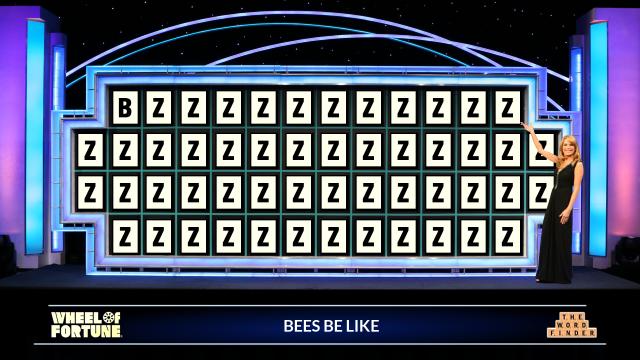
Let’s make things slightly more realistic (but only slightly). What kinds of puzzles COULD appear on the board, and what’s the lowest number of vowels we can get away with without making up words? To get a somewhat satisfactory answer to this question, I tossed the North American Scrabble dictionary into a spreadsheet to see what I could find. There are a handful of 12 letter words with 2 vowels, and some 14 letter words with 3 vowels. That’s the best we can do, which means that if we only put words that are valid in Scrabble on the board, the lowest number of vowels we can have is 10.
Puzzles like POLYRHYTHMIC PHYTOPLANKTONS HYPERTROPHYING THRIFTLESSLY have 42 consonants. That works out to $1,708,925 in a 4 round game, assuming every puzzle has that many consonants, and you get the most expensive available prize during round 3.
This isn’t a perfect answer of course. The Scrabble dictionary doesn’t include every possible word that could appear on Wheel of Fortune. If a word is exclusively used as a proper name, Scrabble wants nothing to do with it. But the names of people and places appear on Wheel all the time. Wheel has also had a ton of different gameplay elements and special rules over the years, so you could hypothetically combine a bunch of older ones to get a higher score. Regardless, this nonsense does give us a ballpark idea of how high we can push the score.
Press Your Luck
Let me tell you about one of my biggest pet peeves in the game show world. Every once in a while, I’ll come across a video or article about game show cheaters. Almost without fail, they’ll mention either Terry Kneiss’ perfect showcase bid on The Price is Right, or Michael Larson breaking Press Your Luck‘s board wide open, and oftentimes both.
I could go on an endless diatribe about why they aren’t cheaters, but I’ll just give you the CliffsNotes version before I shut off my computer in an act of rage minor annoyance. Terry got his bid from Ted Slauson, who had spent years memorizing the prices of all the prizes. Ted was sitting in the audience that day, in hopes of being called down himself. The two men met each other before the show, so Terry knew to look to Ted for help during the showcase round. If Ted is a cheater for simply memorizing things, then I would deserve a 0 on every test I ever took in school.
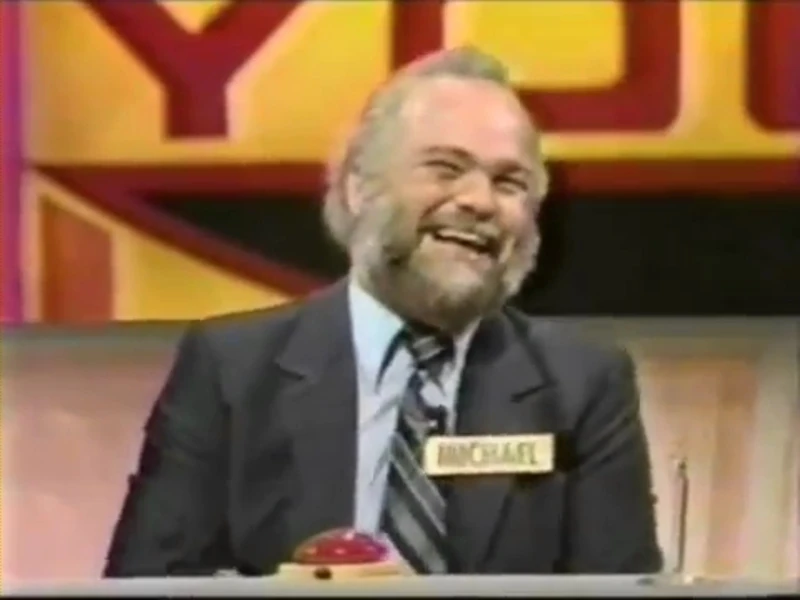
That brings us to Michael Larson, who managed to take 40 spins on Press Your Luck. By the end of the game, he had racked up $110,237 in cash and prizes. He was able to pull this off because two spaces on the big board always contain money and an extra spin. The board only had five possible patterns when he appeared on the show, so he memorized said patterns to land on the extra spin spaces and avoid the Whammy consistently. In theory, this strategy could have let Michael play forever, but the longer you go on, the more likely you are to make a mistake. Knowing this, Michael passed his remaining spins after he crossed the $100,000 threshold, then passed two more spins later on.
People working on Press Your Luck knew that memorizing the board patterns was possible beforehand, but they didn’t program any new patterns in before the premiere. Michael took full advantage, but the show caught on to what he was doing, and they put the kibosh on board exploits once and for all after his appearance. The patterns were randomized more thoroughly, and no one else has done what Michael did.
That being said, it still is possible, albeit unbelievably unlikely, to play Press Your Luck indefinitely. Ever since the CBS version of Press Your Luck ended in 1986, we’ve gotten two other versions of the show (one on GSN and one on ABC). All three incarnations have a Big Bucks space at the top of the board in the final round, and said space awards cash and an extra spin. If you happen to be the luckiest human on earth, there’s no rule stopping you from hitting it over and over and over. It’s still possible to do what Larson did, but there’s no longer a consistent skill-based way to pull it off.
On another note, GSN made a documentary about Michael’s appearance on Press Your Luck in 2003. It discusses how Michael broke the game, and host Peter Tomarken also taught Michael’s opponents how to do the same. The documentary also includes the episodes in question, which was the first time they had ever been rerun. I’d recommend giving it a watch.
Unfortunately, clickbait videos and articles about Michael Larson and Terry Kneiss are going to keep popping up, even though nothing they did was against the rules. There have been quite a few actual game show cheaters over the years though, so I’ll get around to writing about them sometime. Stay tuned.
The Price is Right
Who Wants To Be A Millionaire premiered in the US in 1999, and it ushered in a huge wave of big money game shows. Over the next decade or so, many new game shows came along and offered seven- or even eight-figure top prizes (Greed, Deal or No Deal, Power of 10, et cetera forever and ever and ever). Existing game shows also found ways to get in on the fun. Wheel of Fortune added a million dollar wedge in 2008, and The Price is Right upped the ante as well. From 2003 to 2008, several $1,000,000 Spectacular episodes aired in primetime. So if we want to find out the most money a contestant could have won on The Price is Right, we should give these episodes a closer look.
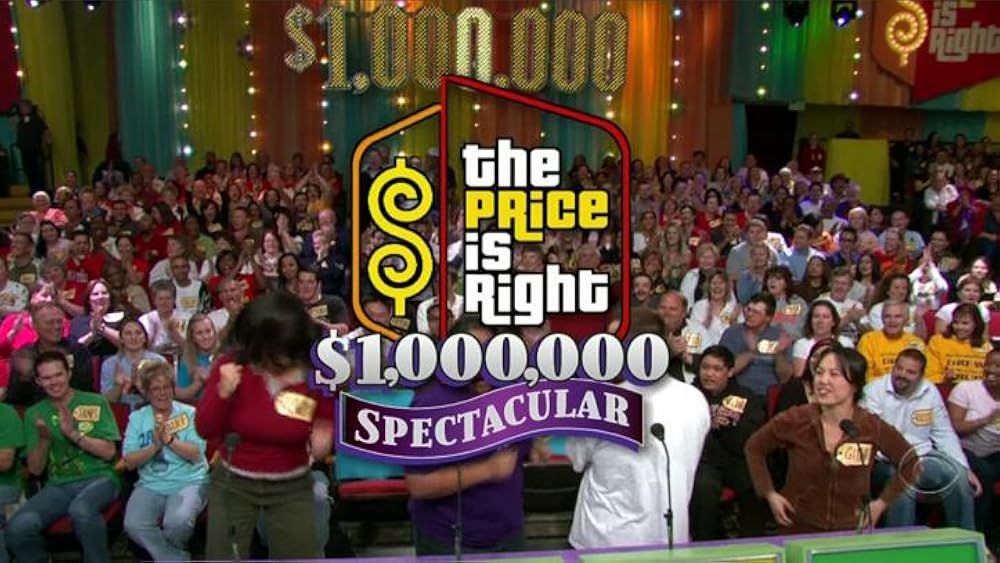
The exact rules of these special episodes varied, but to find the highest possible score, let’s take a look at the ones hosted by Drew Carey. He hosted 10 spectaculars in the first half of 2008, and each one offered TWO chances to win $1,000,000. If you came within $1,000 of the actual price of your showcase without going over, you’d win both showcases plus a million bucks.
But they also added special rules to one pricing game per episode. The most well known rule change was in Clock Game, where Cynthia Azevedo successfully priced both items in under 10 seconds. She was the only person to win a million dollars from a pricing game, but she didn’t win a second million in the showcase. Other rule changes include getting every price right on your first try in Cover Up, One Away, and Switcheroo, finding the $50,000 card with your first punch on Punch A Bunch, and guessing which box contains a $1,000,000 check in 1/2 Off.
The amount you can win on The Price is Right varies wildly, because it depends on which pricing games are played, and what prizes are available throughout the episode. To find out which episode had the maximum earning potential, we have to and add up the values of every prize contestants could have won if they played the million dollar game. That includes the item up for bids that came right before said million dollar game, the prizes in the pricing game itself, $55,000 from the Showcase Showdown ($5,000 for spinning a dollar and $50,000 for spinning another), the prizes in both showcases, and the two chances to win $1,000,000.
Back to the spreadsheets I go.
Plinko was the million dollar game in two of the spectaculars, and it was also the most lucrative pricing game to get that treatment. If the contestants playing the game hit the middle slot three times, they would have the chance to drop a golden Plinko chip. If it landed in the middle again, they would win an additional $1,000,000. The middle slot on the Plinko board is worth $10,000 on the daytime version of the show, but was worth $20,000 for these nighttime specials. That means the regular chips could be worth up to $100,000, since you can drop a maximum of five of them. So contestants could have won $1.1 million during these special Plinko games, plus the value of the small prizes.
Neither contestant got to drop the golden Plinko chip, but the fact that it exists is good enough for today’s exercise. The million dollar spectacular with the most cash and prizes up for grabs is the one shown above. Lindsay won a $5,065 refrigerator on Contestant’s Row, $41,153 in cash and prizes during million dollar Plinko, and a $74,415 showcase, for a grand total of $120,633. But if she had played perfectly throughout the show, she would have won $2,312,360, which is the most the show has ever offered to a single contestant.
Countdown
Earlier this year, I auditioned for Wheel of Fortune, and I told the casting producer that I’m a math major. He heard that and remarked that I was a numbers guy, but I still wanted to come and play a letters game anyway. I didn’t say it out loud, but in my head I was thinking, “hey to be fair, that’s what Countdown is all about.” If you want to succeed on that show, you’ve gotta be good with letters AND numbers. I’ll admit that Countdown isn’t the most interesting show in the universe, but I have a bit of a soft spot for it anyway. I like trying to do the anagrams, and seeing how my answers compare to those of the contestants.
Usually they compare poorly.
At least I fare better with the math puzzles.
Each game of Countdown consists of 10 letters rounds, 4 numbers rounds, and 1 conundrum. Ordinarily, the amount of points you earn in a letters round is equal to the length of the word you submit (assuming your opponent didn’t find a longer word). If I found the word RETINAS, that would earn me seven points. But if you find a 9 letter word, your total for the round is doubled. So a word like VAGABONDS would be worth 18 points.
Numbers rounds are worth a maximum of 10 points, which you can achieve by reaching the target number exactly. The conundrum at the end of the show is worth 10 points as well. So if we add up the maximum possible point values in each round, the highest theoretical score (MASSIVE emphasis on theoretical) is 230 points.
Once again, this maximum score assumes the best possible circumstances, which are incredibly unrealistic. The conundrum is always going to be solvable, and the numbers rounds usually will be as well. Out of the nearly 12 million possible numbers games, it’s possible to reach the exact target 91.2% of the time. The odds of getting four solvable numbers games in a row is 69.2%, so the odds are in your favor in that regard.
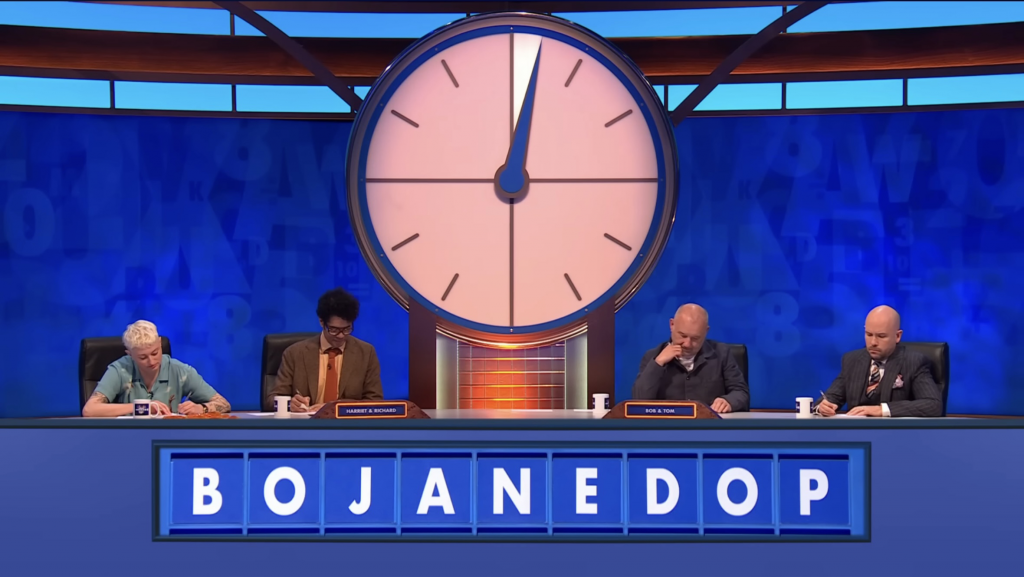
The letters games are where we really run into trouble. We need every single letters round to have a 9 letter word available in the first place, which is exceedingly unlikely. There have never been more than five chances to spell a 9 letter word in a single episode, so getting ten in a row is probably never happening.
The maximum score is 230 under the modern format, but Countdown used to have a slightly different structure. From 2001 to 2013, each game consisted of 11 letters rounds, 3 numbers rounds, and a conundrum, which boosts the highest possible score ever so slightly. Under this format, it was theoretically possible to score 238 points.
Family Feud
Throughout most of Family Feud’s history, the goal of the game has been to score 300 points. So to maximize our score, we want 299 points before the triple points round comes along. We can do that by scoring a combined 199 points in the first two rounds, then 100 in round 3. At this point, we’d be one point away from winning the game, but up to 300 points are up for grabs in round 4. So on most episodes of Family Feud, the best score you can get is 599 points.
This maximum score is pretty easy to approach compared to most of the other shows we’ve looked at today. Many families have scored over 500 points in a game, either by winning every single round, or by correctly answering the sudden death question.
Actually hitting the maximum is another story though. A team would have to get every answer available on the board, which is easier said than done. Most rounds end with at least a few answers that nobody came up with. There would also need to be 599 points available in the first place, which is exceedingly unlikely. Even though the show surveys 100 people, it’s very rare for 99 or 100 of them to be accounted for on the board.

The maximum score in a standard game of modern Feud is 599, but there are a few situations where it would be higher. Towards the end of Richard Dawson’s first tenure as the host, the point goal was upped from 300 points to 400. This higher point target has also been used for the finals of various Family Feud tournaments. In these cases, it would be theoretically possible to score an additional 100 points in a game, for a total of 699.
Louie Anderson also hosted the Family Circle Tournament of Champions in 2002, which had a goal of 500 points in the finals. Since you could hypothetically get 499 points before the points are tripled, you could score 799 under this format.
As for Fast Money, the highest theoretical score is 500 points, but that would only be possible if every question only had two valid answers. That kind of thing is rare, but it has happened. If you got five questions like “name a planet that starts with M” or “name a US state that starts with T,” you could max out the score that way. I wouldn’t count on that happening any time soon, but who knows? Maybe they fire all their writers tomorrow, and replace them with people like me who love chaos.
Conclusion
Y’know, I think this may be the single nerdiest thing that I’ve written for BuzzerBlog so far. I’ve always been one to take things to the extreme, hence this article. World records are a topic that I think a lot of people are interested in to some extent. It’s natural to see someone doing something, and wonder who’s the best at it. But I like taking that train of thought to the next level. Oftentimes, I also want to know the theoretical limit. How good COULD someone be at this? So that’s how we ended up here, with me doing some absolutely ridiculous math.
God I’m a dork.