

The Art Of Game Show Writing: Questions, Answers, And More
Over the last few years, I’ve made a lot of friends in the game show corners of the internet. Every few weeks, we’ll hop into a Discord voice call for a game night. We host our own versions of some of our favorite game shows, and for the most part, we write the material ourselves. As a result, I’ve been thinking a lot about how different shows approach this task. So let’s take a look at a bunch of game shows’ styles when it comes to writing questions (and other material), and see what lessons we can learn along the way.
Who Wants To Be A Millionaire?
Let’s kick things off with something simple. On Who Wants To Be A Millionaire, contestants answer a series of multiple choice questions. Said questions can get quite difficult, but they’re generally written in a very straightforward manner. You may or may not know the answer, but you know what the show is looking for. Let’s take a look at a million dollar question as an example.
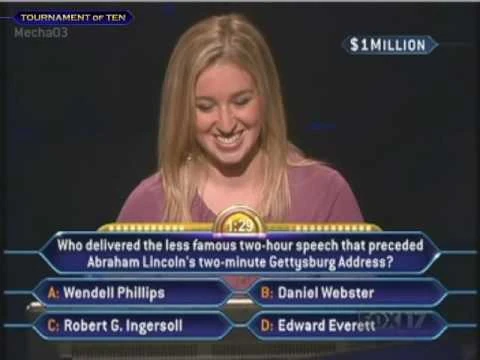
I’m gonna be quite frank here. When I first saw this question, I had no idea what the right answer was. Regardless, it’s very easy to understand what the writers want you to do. The question itself isn’t ambiguous or confusing in any way, so all you have to do is read it over and guess who spoke before Lincoln.
No matter how you decide to write your game show material, clarity is key. Millionaire generally does a good job of that, thanks in part to the fact that the question writers typically don’t do anything too fancy. That’s not to say that other game shows DON’T write clear, understandable material of course, but Millionaire serves as a good starting point for us to jump off from.
If you’re writing some trivia, standard questions like this are a perfectly fine choice. You could write multiple-choice questions like a teacher would for a test, and there wouldn’t be anything wrong with that. There’s no need to reinvent the wheel if you don’t want to. But there are many ways you can deviate from this style (some better than others), so let’s take a look at some examples.
(For those of you playing along at home, the right answer to the question above was D, Edward Everett. Robin Schwartz didn’t lock in her final answer, but she would have chosen Daniel Webster instead. If you got this question right, collect your $100 Mama Mancini’s gift card at the door.)
Jeopardy!
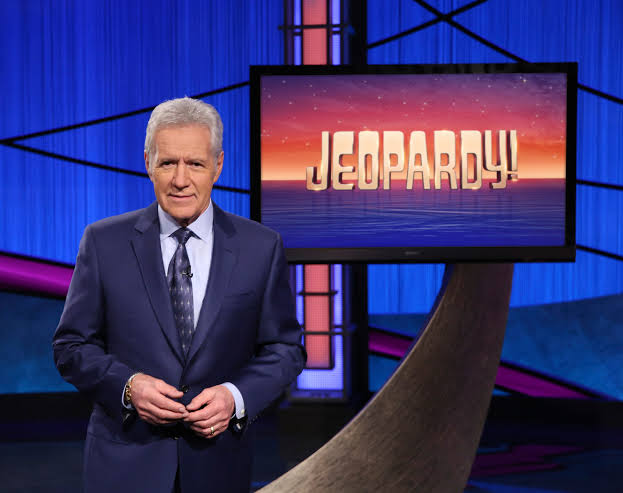
The general idea behind Jeopardy was conceived by Julann Griffin, wife of TV host Merv Griffin. In the late 1950s, it was discovered that several recent game shows were rigged. Following the cancellations of Twenty-One and Dotto, quiz shows took a huge hit in popularity. In the early 1960s, Julann noticed that there hadn’t been a successful quiz show in a while, so she proposed a somewhat unusual idea. Instead of doing a “question and answer” game, why not do an “answer and question” game instead?
Julann suggested the idea to Merv, and demonstrated it by giving him a series of examples. If the answer is “5,280” for example, the question is “How many feet are there in a mile?” This answer-and-question format has become a staple of Jeopardy!’s identity over the years, but it’s not the first show to try such a thing. CBS Television Quiz aired from 1941 to 1943, and that show had the contestants providing questions instead of answers as well.
(Side note, CBS Television Quiz is a contender for the worst TV show title in human history.)
Over the last 60 years, the question writing on the show has been refined significantly. There’s one thing in particular that I appreciate about how modern Jeopardy! clues are written. Even if you don’t know the right response, it’s frequently possible to take an educated guess, because many clues have hints hiding in plain sight. Let’s take a look at an example.
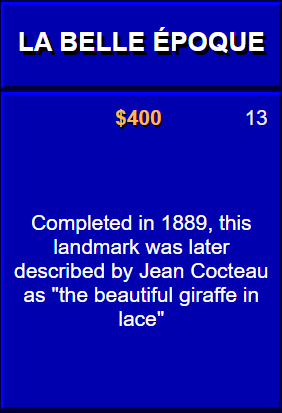
I’m willing to admit that I have no idea who Jean Cocteau is. What I DO know is that his name looks and sounds French (and so does the name of the category), so my assumption is that the landmark in question is located in France. Cocteau uses the word GIRAFFE to describe it, so my next assumption is that I should be thinking about tall structures. The most famous structure that matches those criteria is the Eiffel Tower, so that’s the response I would have given.
Even though I didn’t know exactly when the Eiffel Tower was completed, I was able to arrive at the right response by picking up on the other nuggets of information provided in the clue. In my opinion, that’s one of the most important takeaways when it comes to Jeopardy!’s clue writing. By hiding implicit hints in your clues, you can lead people to the right response, even if they wouldn’t have known it otherwise.
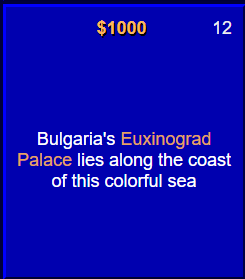
Sometimes the clue’s hints take on a different form as well. The writers will sometimes include an adjective towards the end of the clue, which can help narrow down the possibilites quite significantly. Once again, I have no idea what the Euxinograd Palace is, but I can think of two “colorful seas.” As a result, I know that the right response is probably either the Red Sea or the Black Sea. If you know that the Black Sea is the one that borders Europe, you can arrive at the right response that way.
That’s not the only thing the Jeopardy clue writers are considering though. Back in 2022, Carlo Panno appeared as a guest on BuzzerBlog’s podcast, Tell Us About Yourself. He’s been a game show contestant multiple times, but he’s also served as a researcher and writer on multiple shows, including Jeopardy!. During this episode, Christian Carrion asked Panno what elements go into a perfect Jeopardy! clue. Panno said that clues should generally end with whatever the writers are looking for.
We can see that in action in the Euxinograd clue shown above. The last three words of the clue are “this colorful sea,” which makes it clear that the correct response is going to be a sea of some kind. If the operative phrase (which usually begins with the word THIS) appears earlier in the clue, the contestants are less likely to ring in, because they may not understand what they’re being asked to do. Panno also prefers concise clues over long-winded ones, because that also makes it easier to determine what the clue is asking for.
The Weakest Link

In my last semester of college, I took a class about international relations. Most of the time, we would come into class and take a quiz about the previous week’s readings. The questions were typically open-ended, but the professor gave a lot of hints to help jog our memories. His most common technique was telling us the first letter of the correct answer. By the end of the semester, I had a better idea of how to prepare for said quizzes. If the reading is talking about an important term that starts with Z, I’ll make a note of that. If the professor is asking for a Z word, I should theoretically know what it is automatically.
Then I would immediately forget the Z word in question as soon as the quiz started.
Oh well.
Anyway, this style of question writing reminded me of The Weakest Link, because that show does pretty much exactly the same thing every now and then. Sometimes the question will be phrased like this: “In nature, what N is a soil that is neither acidic nor alkaline?” On The Weakest Link, the ultimate goal of each round is to build the longest possible chain of right answers in a row (9 in the original UK version). That’s a tall task any way you slice it, but the show makes it more feasible by including explicit hints like this. Giving the contestants the first letter for free can make it easier to come up with the right answer while you’re on the clock.
The show also makes building a perfect chain slightly easier by asking a few multiple choice questions here and there. You might get a million open-ended questions in a row, followed by something like, “In the animal kingdom, what is a condor: an eagle or a vulture?” Even if you don’t know that the answer is a vulture, you have a good shot at getting it right if you guess at random.
Each game show has to take a slightly different approach when they’re writing questions, because not every show is aiming for the same level of difficulty. The Weakest Link benefits greatly from having a few easier questions sprinkled in, because the team’s goal is to get a bunch of right answers in a row. Sometimes a contestant will even get a basic arithmetic question like “what’s 1 plus 2 plus 3 plus 4?” That sort of thing wouldn’t fly on most other shows, but it works well on The Weakest Link.
Match Game-Hollywood Squares Hour
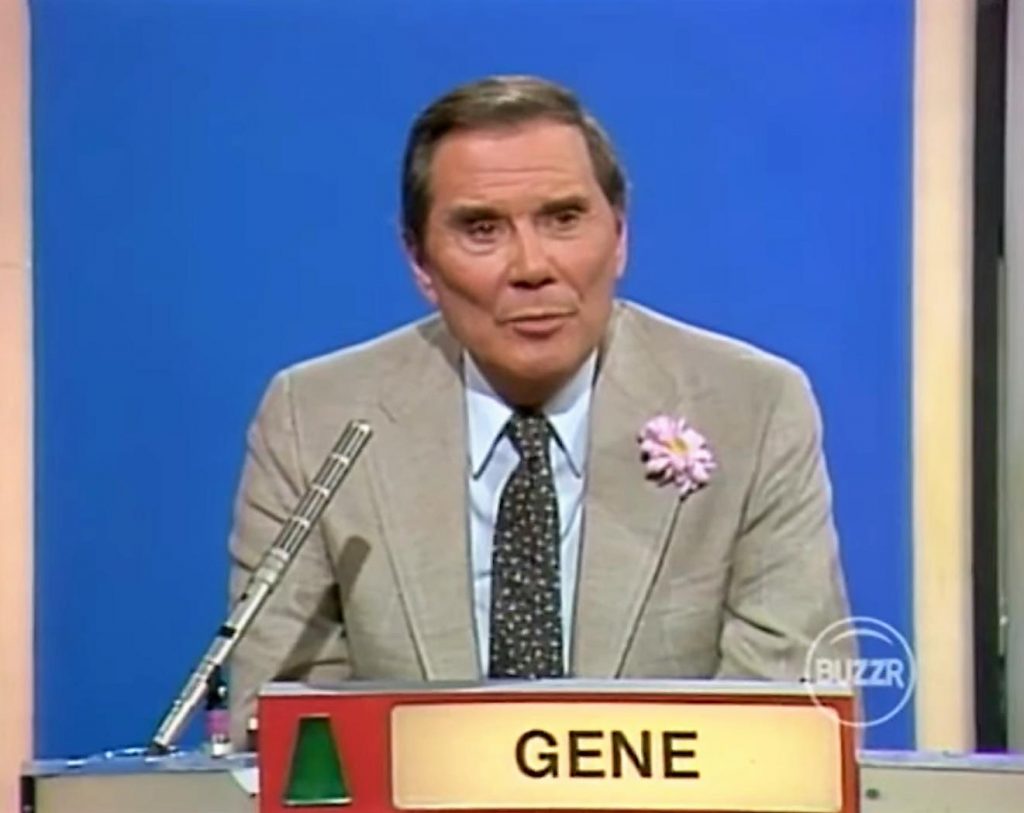
And now for a lesson in how NOT to write game show questions. In the early 80s, Match Game and Hollywood Squares both briefly came to an end. In 1983, NBC began airing a hybrid version of the two formats. Mark Goodson ran the production company behind Match Game, and he took the wheel for Match Game-Hollywood Squares Hour as well.
The Match Game half of the show was very similar to the iterations that came before it. But Goodson made some notable changes for the Hollywood Squares portion, which were quite poorly received. On other versions of Squares, most of the questions were open ended. Not only did the writers come up with the questions, but they also wrote joke answers (otherwise known as zingers) for each celebrity. Upon hearing the question, the star would give a zinger, followed by a sincere attempt at an answer. That gave Hollywood Squares its own identity and charm, which Goodson promptly tore down in record time.
On Match Game-Hollywood Squares Hour, there were no pre-written zingers. Goodson didn’t want any part of his show to be scripted, so he didn’t give the stars any material to work with. On top of that, the questions were multiple choice, which meant there was even less room to say something funny. That made the second half of the front game a slog to sit through, which is a real shame. A crossover between Match Game and Hollywood Squares had the potential to be a much better show, but the question writing for Squares (not to mention other changes to the format) massively held it back.
Don’t get me wrong, multiple choice questions work perfectly well in many other game show formats. On a show like Hollywood Squares though, they fall flat. Open-ended questions and zingers are a huge part of this show’s DNA, so removing them makes the Hollywood Squares half of the proceedings fall flat. The moral of the story here is that when it comes to question writing, not all game shows are created equal. Material that works on one show won’t necessarily work on another.
Press Your Luck (2019)
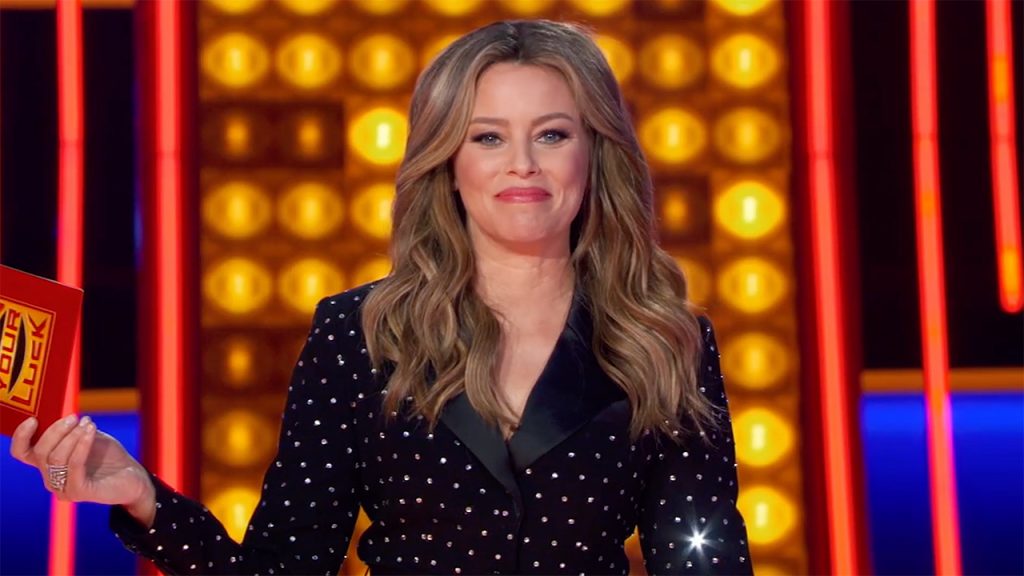
Elizabeth Banks’ version of Press Your Luck is a fan favorite within the game show circles that I’m a part of. In order to decide how many spins each player gets on the board, each episode contains a microscopic amount of trivia. Most people aren’t watching this show for the trivia questions, and the writers know that. In turn, they write material that’s much easier and much less serious than the average game show. These questions are often heavily embellished with modern slang and pop culture references. Let’s start with a pretty standard piece of trivia as an example.
“Which Major League Baseball team plays its home games in San Francisco?”
The correct answer to this question would be the Giants. That’s not an overly exciting or interesting question though, so this is how Press Your Luck spruced it up for the show.
“If Eva Longoria scored tickets to watch Evan Longoria play a home game in San Francisco, for what Major League Baseball team would Eva Longoria be watching Evan Longoria play?”
It’s a bit of a wordy question, but the general idea is good. Eva Longoria is a famous actress, and I’ve always found it pretty amusing that Evan Longoria’s name is so similar to hers. By transforming basic questions like this, the writers turn the question rounds into a bit less of a chore. The spins on the big board are a few minutes away at this point, but the show may as well have a little fun with the questions until then.
This is another example of not every game show being created equal. The big board is the main attraction of the show, so there’s no need to write Millionaire or Jeopardy! level questions. Easier material works well for this show, because Press Your Luck is infinitely more fun if people are mostly getting the questions right. When the contestants get more correct answers, there are more spins to go around, which in turn means there are more chances for something exciting to happen on the board.
I’ve always told my friends that they’ll probably never see me on a trivia show, but there are a few exceptions to that rule. Press Your Luck is a show where you have to answer trivia questions, so I guess it does fall under that umbrella. I would get absolutely steamrolled on a show like Jeopardy!, but I wouldn’t be worried about Press Your Luck’s difficulty at all. I’m not sure if it’s gonna get another season after this year, but I would 100% apply for a season 8. It’s one of my favorite game shows, they give away a ton of prize money, and the trivia questions are barely a concern at all.
Richard Osman’s Michael Sheen’s House of Games

House of Games is one of my favorite game shows from the UK. The question writers come up with a ton of fun rounds, so I could sit here for hours on end dissecting them all. For today though, let’s focus on Reichard Ösmanns Haus Der Spiele. In this team round, the contestants have to answer trivia questions that are written in different languages. Quite frankly, hearing Richard try to read questions in Italian and Swedish is absolutely dreadful, but it’s an interesting exercise in question writing nonetheless. One time, they asked the following French question:
Quelle pièce des échecs déplace-t-on en formant un L?
Tour
Pion
Cavalier
The name of the game here is cognates. Many words we use in English today were borrowed from Romance languages, which means it shares a lot of vocabulary with French. Even if you don’t speak French, you can almost certainly intuit that PIÉCE means PIECE. The question ends with FORMANT UN L, so you can reasonably assume that it’s talking about forming an L shape of some sort. It’s common knowledge that the knight moves in an L shape on a chess board, so the next step is finding the right answer.
CAVALIER is spelled the same in French and English, and the knight is the most cavalier-adjacent piece on a chess board. Many of the words in this question look like words that we have in English, which makes it possible to answer even if you don’t speak a lick of any other languages.
There’s a lesson to be learned here, but it’s not necessarily applicable in a ton of situations. Even if your questions aren’t in English, there’s a good chance that the contestants will be able to answer them correctly, as long as you write them carefully. As we saw a second ago, cognates help bridge the language barrier, which greatly helps the contestants arrive at the correct answer.
There are two caveats to this though. First of all, the questions should be easier than normal if you’re writing them in Spanish or something. Picking out cognates and understanding the question is the main attraction of this House of Games round, rather than answering something difficult. As soon as the contestants figure out what the question is, the answer should be something that most people will know.
Second of all, you should stick to Germanic and Romance languages, because those languages have the same writing system, and they have a lot of vocabulary in common with English. If your contestants are monolingual English speakers, they probably won’t get a question in Mandarin right. Of course, it’s also your prerogative to ignore all this noise, and just write trivia questions in the language your contestants have in common. But if you want to get adventurous, the option is there.
25 Words Or Less
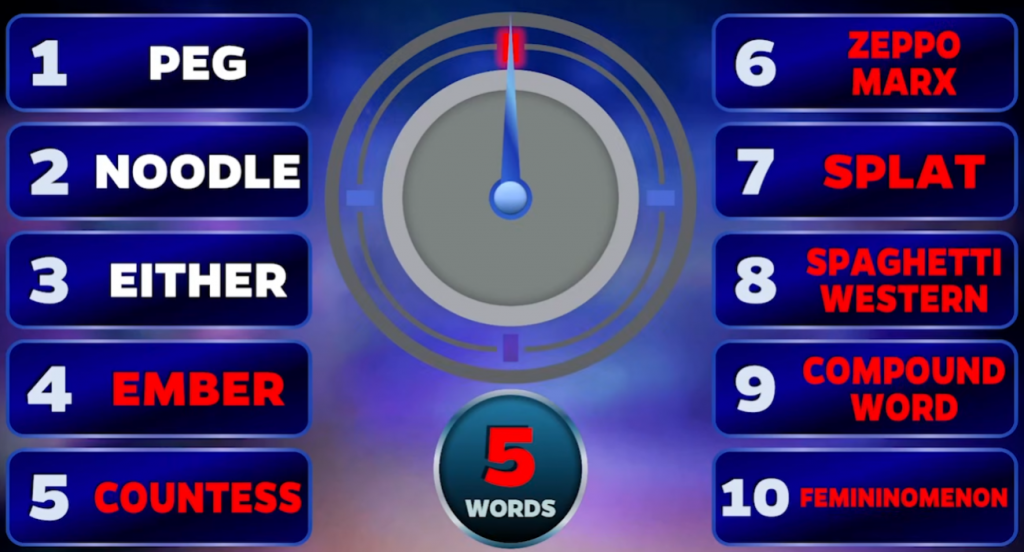
In recent years, 25 Words or Less has become one of my favorite game shows. Whenever my friends and I organize a game night, chances are someone is gonna host a few games of 25 Words. I love coming up with material for this show, because you can get away with quite a lot. When the celebrities build their boards, they can choose green words that are worth 250 points, yellow words worth 500 points, or red words worth 1,000 points.
Ladies and gentlemen, the red words on this show can be absolutely diabolical. Most of the 1,000 point options are 2 to 4 word phrases, rare words with much more common synonyms, or things that the contestants might not be familiar with in the first place. Here’s a sample of red answers that have appeared on 25 Words.
- KOMODO DRAGON
- UNDERFLOOR HEATING
- ANIMAL MAGNETISM
- ECHINACEA
- THE CONSTITUTION (Getting CONSTITUTION is pretty easy, but your team ALSO has to say THE to get the points. That didn’t go so well on the show.)
- TCHOTCHKE (You may know what a tchotchke is, but it’s got quite a few synonyms and other related words. If I’m sitting in the pod trying to guess this word, I’m probably gonna come up with wrong answers like KNICKKNACK, DOODAD, or THINGAMAJIG before I ever think of TCHOTCHKE.)
For my game nights, I like to make my red words even MORE ridiculous than that. Here’s some of the devious nonsense that I’ve dreamt up in the past few weeks.
- NEWTON’S SECOND LAW OF MOTION
- BURT LUDDIN’S LOVE BUFFET
- MARK GRUDZIELANEK
- KINGDOM HEARTS HD 2.8 FINAL CHAPTER PROLOGUE
Believe it or not, nobody wanted to pick any of those answers. I couldn’t imagine why.
On the other hand, sometimes I write a long-winded answer that I think my friends WILL get right. Since our love of TV (specifically game shows) brought us all together, I’ll include long or specific phrases like these.
- THINGS REGIS PHILBIN’S COFFEE CUP MIGHT SAY
- WHAMMY! THE ALL NEW PRESS YOUR LUCK
- THE $1,000,000 CHANCE OF A LIFETIME
- NEW BABY BUGGY
- THREE PEOPLE WHO’VE NEVER BEEN IN MY KITCHEN
If you’re writing game show material for people you know well, you can get away with a LOT of nonsense. This is some of my favorite material to write, because my friends are relying on the niche knowledge that we all share. It creates a more fun atmosphere for us, but I wouldn’t dream of writing this kind of foolishness for anybody else.
On the other hand, you also get a lot of opportunities to write evil material in this scenario. You’re not making a TV show that’s governed by laws and whatnot, so you can feel free to torment your friends and family by putting Slovak words on the board. I’ve gained a bit of a reputation for writing nonsense, and I wouldn’t have it any other way.
Wheel of Fortune
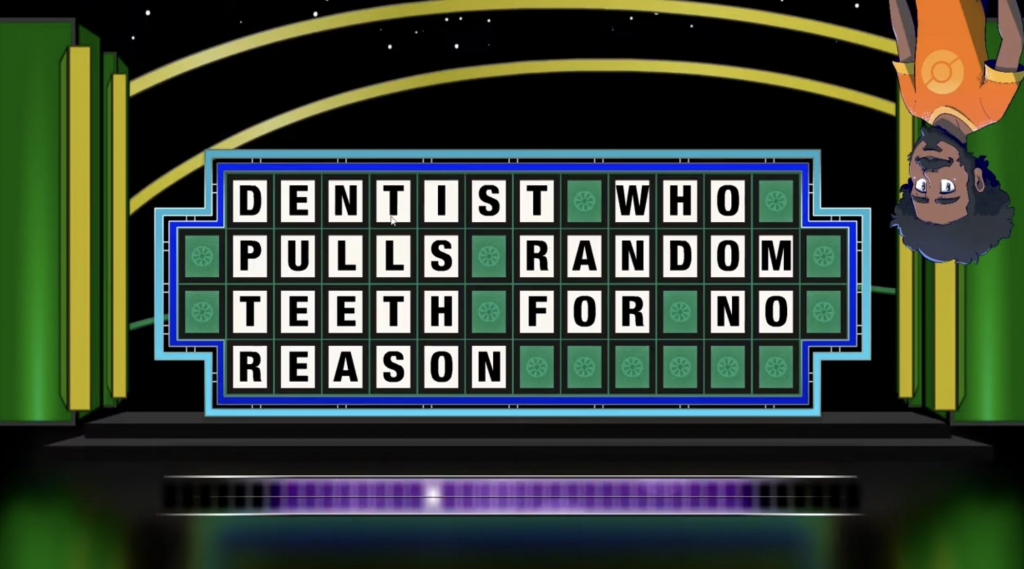
In recent years, Wheel of Fortune’s bonus round has become infamous for its difficulty. Many of the puzzles are hard to solve under the bonus round’s ruleset, because they include rare letters and/or unusual words.
Behold.
- NICE WARM YURT
- FIXING THE VACUUM
- QUICKEN THE PACE
- JAZZ FESTIVAL
- QUILTED FABRIC
- SPIFFY BLAZER
These puzzles are generally hard for a reason though. Wheel of Fortune gives away quite a bit of prize money, so puzzles like QUIXOTIC XYLOPHONES help keep their budget under control. If you made this round too easy, the champions would be winning way more money per episode. All of the cash envelopes on the bonus round wheel are worth at least $40,000, which is quite a lot for a daily syndicated game show. Unfortunately for the contestants, diabolical bonus rounds can potentially save Wheel millions of dollars per season.
Recently, I’ve also started tormenting my friends with evil Wheel of Fortune puzzles. I’ve started streaming custom Wheel games live on YouTube, and I’ve written some hot garbage for this show too. Last week’s stream featured two On The Map puzzles: IOWA and OUAGADOUGOU. When there’s only one or two unique consonants in the whole puzzle, it’s gonna take a while for your victims contestants to get a single letter on the board. By the time the IOWA puzzle was complete, my friends had called 18 different letters. Once again, that’s really not what you want on the real show, but anything goes if you’re hosting your own game of Wheel.
Other highlights include:
- IN THE KITCHEN: FIRE
- ON THE MAP: WATER THAT I SPILLED ON MY MAP
- WHAT ARE YOU DOING?: CRACK
- THING: CONTRABASS SARRUSOPHONE
Conclusion
When it comes to writing material for a game show, there’s a lot to consider. Some formats synergize well with hard questions, but easy ones also have their place in other formats. Fine-tuning the difficulty of a game show can also be a way to stay within the prize budget. Open ended questions are better for some shows, and multiple choice questions are better for others. Virtually every game show has some sort of lesson to teach us when it comes to writing material, and I’ve only begun to scratch the surface with this article.
OK that’s it, go home.